Asking new readers to confirm by email
Double opt-in means a reader who signs up is sent one email with a confirm link, and is not added to your list until they click it. It is off by default on every list.
Turning it on
On the Subscribers page, click Lists. Each list has a button reading Confirm by email: off or on. Click it to switch. You can also tick Ask new signups to confirm by email when you create a new list.
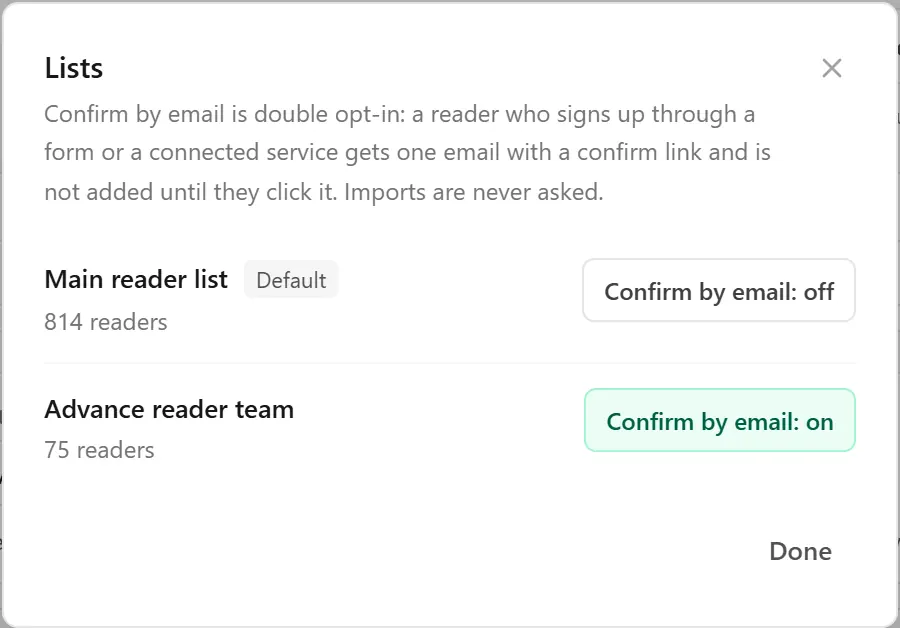
The setting changes what happens to the next signup. Readers already on the list are not asked to confirm, and readers already waiting keep their link.
Who gets asked
Only readers who arrive through a signup form or a connected service such as BookFunnel (coming soon). Readers you import from a spreadsheet or move from another platform are never asked, because they already agreed to hear from you there. Asking them again would lose most of them.
What the reader receives
A short email with one button, Yes, subscribe me (or Confirm and get my copy when your page offers a book), and a line saying they can ignore it if they did not sign up. No tracking. If your sending domain is verified, it comes from your own address with your pen name. Until then it comes from Your pen name via Penomaly, with replies going to your reply address.
Where a waiting reader shows up
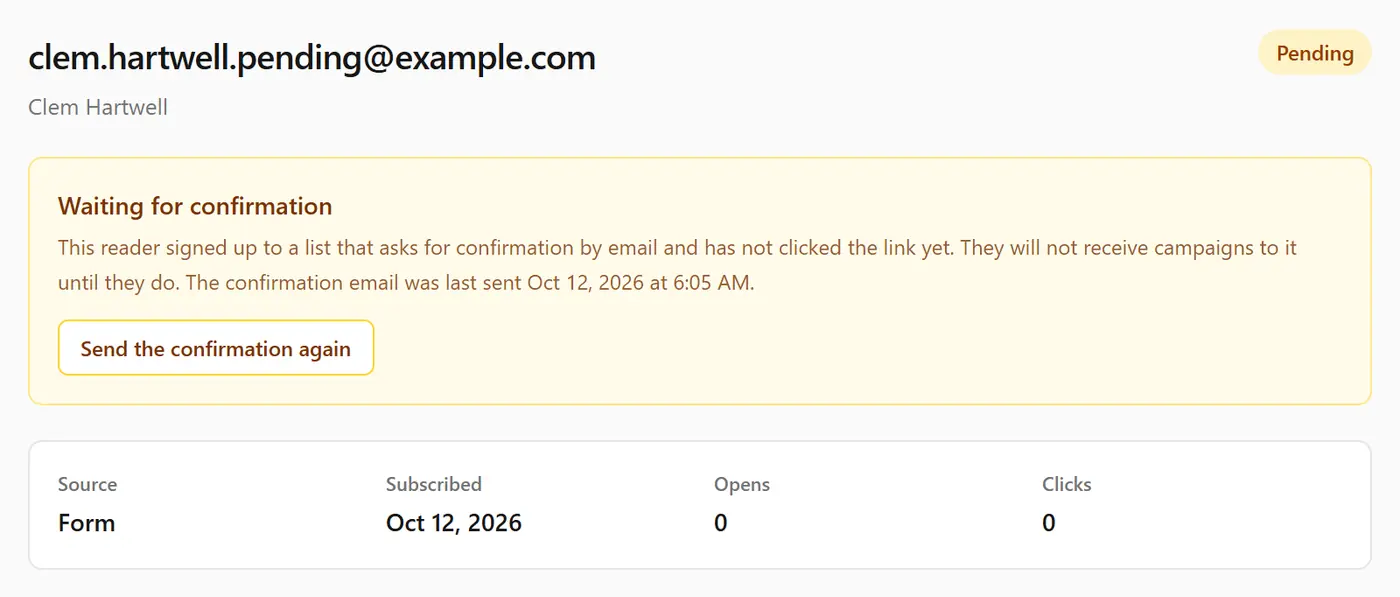
On the Subscribers page they appear with the status Pending. Open the reader and you will see when the confirmation was last sent and a button to send it again. A pending reader does not receive campaigns.
The link
It does not expire. A reader who finds the email a month later is still confirmed. Signing up again sends a fresh link and voids the old one. Once used, the link cannot be used again.
When to use it
Worth turning on if you have readers in the EU, where a record of consent matters most, or if a form is attracting addresses that bounce. Leave it off for a reader magnet where every extra step costs signups, or when a partner service has already confirmed the address.